
Hiking Trail Maps
The Girl Scout Motto is ‘Be Prepared.’ Scouts should review the relevant hiking map before any planned hiking trips with the troops.
- Baltimore County Center for MD Agriculture and Farm Park
- Gunpowder Falls State Park-Jerusalem Mill
- Gunpowder Falls State Park-Pleasantville
- Gunpowder Falls State Park-Hammerman
- Gunpowder Falls State Park-Hereford
- Gunpowder Falls State Park-Sweet Air
- Gunpowder Falls State Park-Sweathouse & Lost Pond Area
- Gunpowder Falls State Park Overview
- Instructions for Printing Maryland State Park Maps for Personal Use
- Cromwell Valley Park
- Cylburn Arboretum
- Holt Park and Center for the Arts
- Irvine Nature Center
- Oregon Ridge Park Trail System
- Oregon Ridge Park-Map of Lodge Area
- Bear Legacy Adventure Trail
- Masonville Cove
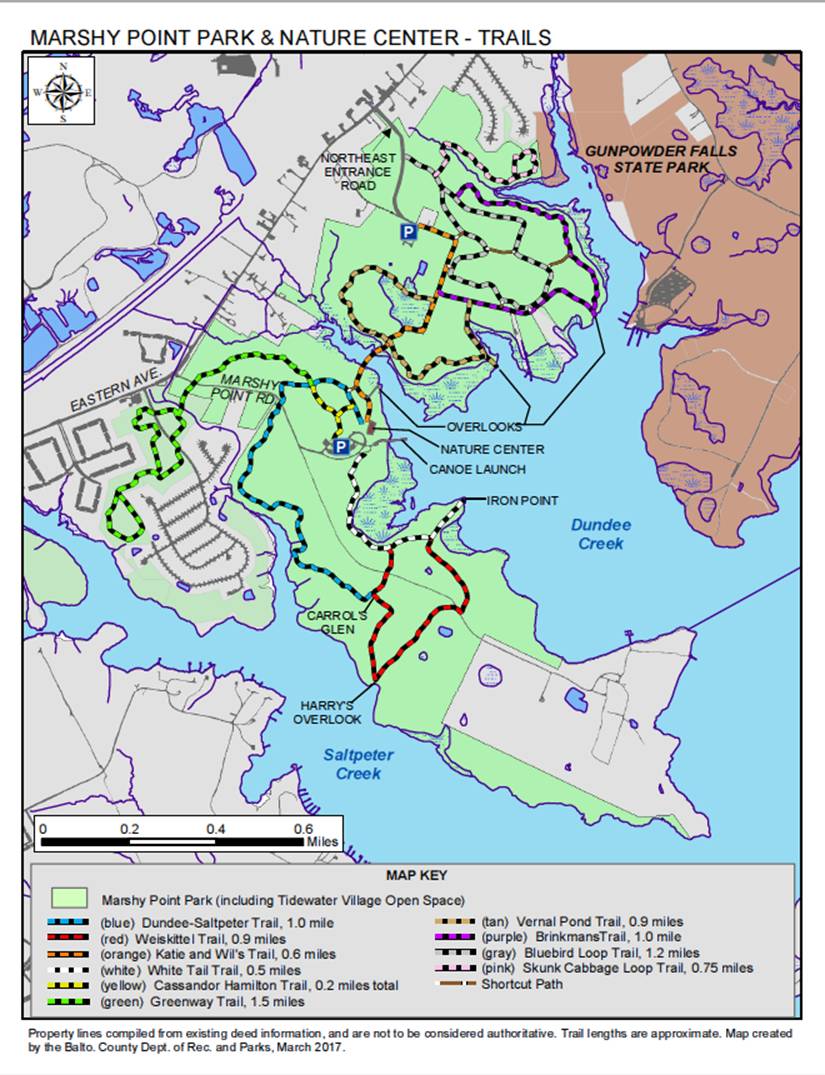
- Marshy Point Park
- Prettyboy Reservoir Map
- NCR Trail
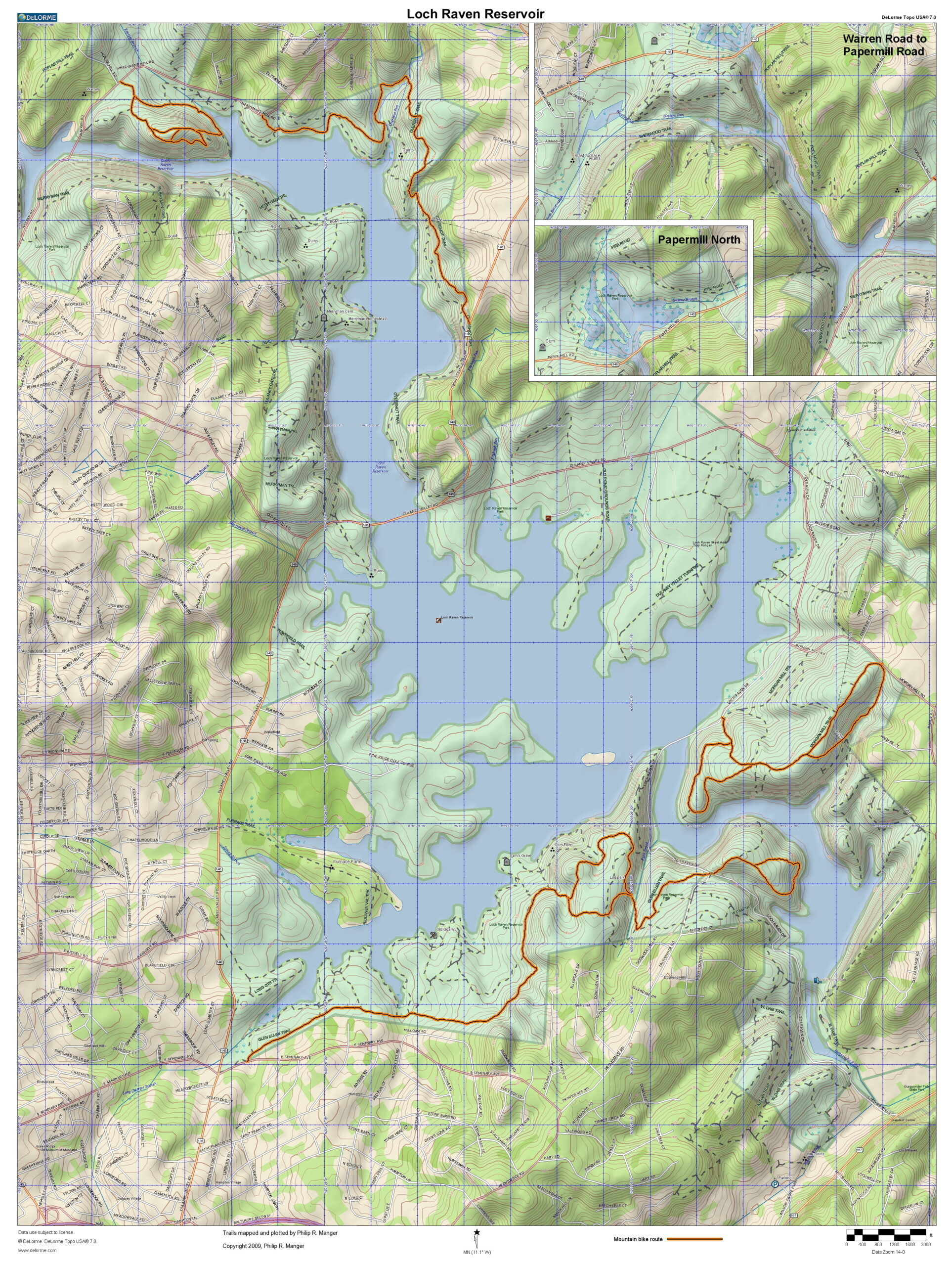
- Loch Raven Reservoir Map
- North Point State Park
- Catonsville Rails to Trails
- Patapsco Valley State Park
Orientering
dg
U.S. Geological Survey Map-White Marsh, MD
Leave No Trace
Girl Scouts adhere to the principles found in the national outdoor skills and ethics education program Leave No Trace. This program is based on seven principles. The seven principles can be summarized as follows. You can memorize the hand signs to help you remember each one.
- Know before you go- 1 finger to head
- Choose the right path – 2 fingers across palm
- Trash your trash – 3 fingers, scoop and bury
- Leave what you find be – 4 fingers, make a camera
- Careful with fire -5 fingers up from palm
- Respect wildlife – 3 fingers each side of head (moose)
- Be kind to other visitors – peace sign and wave
While each principle can be summarized in a short sentence, there is more to each principle. Below are more details on each to help you better understand them.
- Plan ahead and prepare
- Know the regulations and special concerns of the area you’ll visit.
- Prepare for extreme weather, hazards, and emergencies.
- Schedule your trip to avoid times of high use.
- Visit in small groups. Split larger parties into groups of 4-6.
- Repackage food to minimize waste.
- Use a map and compass to eliminate the use of marking paint, rock cairns, or flagging.
- Travel and camp on durable surfaces
- Durable surfaces include established trails and campsites, rock, gravel, dry grasses, or snow.
- Protect riparian areas by camping at least 200 feet from lakes and streams.
- Good campsites are found, not made. Altering a site is not necessary. In popular areas, concentrate use on existing trails and campsites. Keep campsites small. Focus activities where vegetation is absent.
- Dispose of waste properly
- Pack it in, pack it out. Inspect your campsite and rest areas for trash or spilled food. Pack out all trash, leftover food, and litter.
- Deposit solid human waste in catholes dug 6-8 inches deep at least 200 feet from water, camp, and trails. Cover and disguise cathole when finished.
- Pack out toilet paper and hygiene products.
- To wash yourself or your dishes, carry water 200 feet away from streams or lakes and use small amounts of biodegradable soap.
- Leave what you find
- Preserve the past; examine, but do not touch.
- Leave rocks, plants, and other natural objects as you find them.
- Avoid introducing or transporting non-native species.
- Do not build structures, furniture, or dig trenches.
- Minimize campfire impacts
- Campfires can cause lasting impacts to the backcountry.
- Use a lightweight stove for cooking and enjoy a candle lantern for light.
- Where fires are permitted, use established fire rings, fire pans, or mound fires.
- Keep fires small. Only use sticks from the ground that can be broken by hand.
- Burn all wood and coals to ash. Put out campfires completely, and then scatter cool ashes.
- Always keep water nearby fires in case of an emergency.
- Respect wildlife
- Observe wildlife from a distance. Do not follow or approach them.
- Never feed animals. Feeding wildlife damages their health, alters natural behaviors, and exposes them to predators and other dangers.
- Protect wildlife and your food by storing rations and trash securely.
- Control pets at all times or leave them at home.
- Avoid wildlife during sensitive times: mating, nesting, raising young, winter, etc.
- Be considerate of other visitors
- Respect other visitors and protect the quality of their experience.
- Be courteous. Yield to other users on the trail.
- Step to the downside of the trail when encountering pack stock.
- Take breaks and camp away from trails and other visitors.
- Let nature’s sounds prevail. Avoid loud voices and noises.
Trail Markers and Tracking
Trail signs and markers help hikers find their way. Trail signs are typically wooden or metal signs that indicate trail names, directions, destinations, and distances. Trail markers are painted or carved symbols places along the trail to indicate the path. Trail markers come in various forms, including painted blazes on trees, stones, or posts. These are used to mark the beginning or end of a trail, changes in direction, and trail junctions. Some areas have few or no well-defined trails. Scouts need to learn how to follow and make trail markers to avoid becoming lost. Below are a few common trail signs.
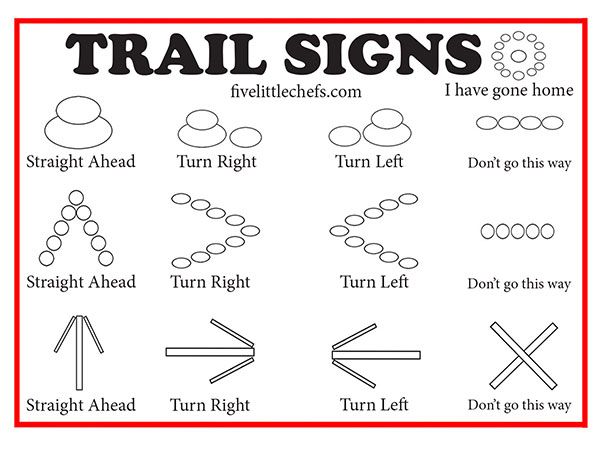
Tracking, a traditional scout activity, involves leaving signs or symbols made from natural materials, such as sticks and stones, on a trail or course for others to follow. These are temporary trail markers using avalible materials for situations where signs are missing or lack clarity. No-trace principles apply. When you lay out a trail, be sure afterward to remove your tempoary trail markers. Generally, either the person who laid the signs is responisble, or the last person down the trail.